- Introduction
This paper aims to articulate why and how Muslims in the west, particularly their institutions such as mosques and bona fide community organisations, should prioritise their works with mainstream civil society to not only protect their own rights but for the common good of all.
God created humans as His ‘representatives’ or stewards on earth (Qur’an 2:30) and this is one of the primary objectives of Islam. Believers must strive to always perform this job of stewardship in all circumstances and in the best possible manner. Islam is as spiritual as it is communitarian, and its social aspect is about the individual believer’s utmost struggle (Arabic Jihad) to create an empathetic, respectful and equitable society. Besides a few core beliefs and some compulsory ritual worships, good behaviour and serving fellow humans are the markers of a pious Muslim and are highly rewarded as a form of ‘continuous charity’ (Sadaqa Jariyah) that will carry immense cumulative weight on the Day of Judgement.
Knowledgeable and clear-headed leaders of mosques and other faith-based institutions should thus prioritise twin objectives:
a) help build the community’s internal capacity by using the talents of their own congregation or members
b) encourage the community to contribute towards the ‘common good’ by working with people of all backgrounds
Both these tasks are vital for grassroots democracies in any society. The survival and success of a faith community in a plural democratic, but post-religious, society depends on the rootedness to its faith and internal solidity on the one hand and confident engagement and alliance building on the other. Both need a better socio-religious and philosophical understanding with commitment from those across the various layers of leadership, be it grassroots or national, along with thoughtful plans and effective actions. Effective leaders should be equipped with contextual knowledge of Islam vis a vis the society they are living in as well as their confident interaction and productive participation with society.
Naturally, Muslim civic leaders should possess a higher level of social and political literacy as well as intellectual maturity to educate and train their members with the spirit and ethos of serving people without expecting any benefit or return. In a world dominated by materialism and a ‘me first’ culture, spirituality and humility are antidotes to many diseases of the human soul and Muslims leaders should lead by example with a higher moral character.
If Muslim institutions and their members or workforce remain segregated from a country’s civic and political life, they will undoubtedly have an insular world view and carry a false sense of achievement. The young generation will become more and more withdrawn from getting involved with any community initiative sending it further into a downward spiral. The generation and culture gap amongst Muslims have been a worry in many western countries. Talented and professional Muslim youth, even children of many known community leaders, are not coming forward to lead mosques and organisations their parents themselves established. A community can hardly succeed if its youth talent is not harnessed properly.
- Story of Muslim migration to the modern West
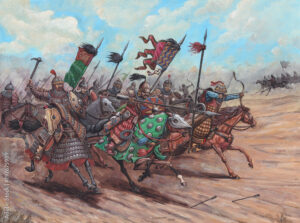
The meteoric rise and expansion of Islam in its early decades and centuries in the Levant sent a shockwave across Europe and the wider world. The eruption of knowledge, academia and intellectual pursuit amongst Muslims initiated a civilisation that in turn energised the then intellectually stagnant Europe. Some Christian leaders became so envious and angry that they mobilised a series of religious wars, known as the Crusades, against Muslims to secure control of holy sites. They captured Jerusalem in 1099 with a bloodbath, but a chivalrous Muslim leader, Salahuddin Ayyubi, regained it without any retribution in 1187. Soon after, the Mongol Horde came upon Muslims from the north as a curse and destroyed the Abbasid empire, though they were defeated in battle in 1260.
However, the course of history was changing. By the 13th century, the already weakened Muslim world was falling behind because of internal disunity and a lack of intellectual vitality. An epoch-making Renaissance in Christian Europe, thanks to the Muslim intellectual contribution towards it, created an unparalleled vigour that hurled it to the four corners of the world. With superior knowledge and drive, but bereft of its Christian values and teachings, its ruling class began an audacious ‘discovery’ of the then unknown world that resulted in a series of wars of conquest, ethnic cleansing, and genocide of weaker indigenous people in the two Americas and Australia. “Europe is ablaze with knowledge and skills. Truly its foundation of life is in the pitch darkness”, lamented Asian philosopher poet Iqbal in early 20th century.
There was stiff resistance from the victims in many places, but they simply were not a match and the three ‘new’ continents soon turned into European settler colonies. At the same time, many Asian and African countries also fell victim to colonialism, mostly through their own hands be it from decadence or deceit. European colonisers were relentless in their injustice, using divide and rule policies or enslaving millions of Africans and shipping them to America.
For Muslims, colonialism brought an unparalleled humiliation and internal crises from which they are still struggling to recover. Post-independence Muslim countries, including the Arab world, were deviously fragmented by colonisers and have failed to unshackle themselves from the clutches of western ‘divide and rule’ policies as well as the ineptitude and corruption of new Muslim rulers. Failed economies and politics in their homelands has forced many Muslims to migrate to western countries to seek a better life and higher education. They are now a significant minority in the West.
In spite of good progress in some areas, Muslim communities have generally been behind their peers in most countries across the major socio-economic indicators. Post-9/11, the community is seen in many circles against a prism of national security, with an illiberal prejudicial narrative of ‘us and them’ propagated by political, media and intellectual establishments including thinktanks. Compounding this are the societal and modern life-style issues that pose theological and social challenges to many faith groups.
Western Muslims have a major task ahead of them to unchain themselves from their current predicament and build their community to work effectively with the civil society.
- State of Muslims in western countries
The emergence of Muslims, a community of communities, in western countries is inevitably varied because of their historical relationships with each. The first generation in every country has worked hard to build the infrastructure such as mosques, community organisations or businesses with mixed success.
There are practical reasons for the community’s relative socio-economic weaknesses. The first generation often started their journey from weaker socio-economic or rural backgrounds in a new environment. Internal differences on ethnic, linguistic, sectarian and political lines also played their part. Identity confusion amongst many, particularly youth, remains a lingering issue for some.
In any socio-economic indicator such as health, housing or employment, it is unfortunate that Muslim communities are often at the lower rung of the ladder in almost every country. Whilst they have done well in some areas such as charity or small business enterprise, their presence in politics, media and wider areas of influence is still insignificant. They are often misrepresented or portrayed negatively in not only the right-wing media but often in mainstream papers. Known Islamophobes often get away with disparaging comments about particularly Muslim women with little fear of repercussion.
Despite better educational achievements in recent times, the social mobility within Muslims is still poor with prejudice, double standard and discrimination as contributory factors. Many religious conservatives find the ever-changing modern lifestyle especially daunting and have not navigated wisely.
- Issues of identity and a sense of belonging
The Islamic concept of God and His planet that we inhabit is unique and revolutionary; our earth is God’s beautiful garden with a fathomless canopy. Due to Islam’s universality, Muslims have always felt at home in any place and often travelled to faraway lands for knowledge, trade or aid without inhibition. The famous Moroccan scholar, traveller and author, Ibn Battuta (1304 – 1369) served as a minister or advisor in many places.
Muslims with knowledge understand that their sense of belonging in any place is as vital as their sense of responsibility. As responsible stewards of God they always took responsibility towards other human beings and the earth seriously. Islam celebrates multiple human identities – ethnic, linguistic, religious or other – that liberate people from one-dimensional blind spots.
Vision and reality may not always match, but Islam’s teachings are meant to produce globally minded citizens who work not only for their own interest but for the benefits of all. Its balanced middle-way approach has always brought positive outcomes in social cohesion. When Muslims practise what they preach, Islam’s dynamic and creative features shape their lives positively; their ‘Muslimness’ creates a synergy. To knowledgeable Muslims, the idea of ‘us and them’ based on one’s clan, tribe or race is an alien concept. The month-long Ramadan fasting teaches them to nurture fellow feelings to play a positive role in all ages and places.
The accusation that Muslims prefer isolationism or separateness is a red herring, a political ploy by some right-wing politicians to win votes in elections. However, it is also a reality that Muslims have faltered in exemplifying social solidarity in many places of the West. They need to improve their political know-how and communication skills to address the multiple causes that are hindering to build alliances with various civic society groups. Islam teaches its adherents to unilaterally contribute to the wellbeing of people around, in spite of prejudice or cynicism that may be hurled at them.
- What should the western Muslim priorities be?
A lot of creativity and out-of-box thinking is needed by Muslim leaders from all sectors of life – from mosque leaders to academics to politicians – to devise simple means and strategies to effectively engage in a pluralist society. Lazy thinking or replication of other approaches without considering the nuances of the community at home will not be helpful. The first generation, still a predominant demographic in many countries, needs empathetic and practical support in adjusting with the post-religious socio-cultural reality in their new environments. The others need confidence in not only working for their own group or community, but also working with mainstream society.
It is essential majority Muslim populations positively and proactively work with mainstream organisations and movements that fight for social and economic justice. Citizens in western democracies have the ability to exert ‘people power’ locally and nationally as well as through professional bodies such trade unions. In a strong democracy with a trusted and independent judiciary, the civil society boldly steps forward to take governments and public servants to task. Staying away from a country’s civic and socio-political life brings multi-level disadvantages for any minority community.
Conscientious parents on one hand and mosque and community leaders on the other should bring their heads together to educate the community, particularly the youth, on political literacy in a pluralist society and the importance of civic participation. Awareness of serving people should be engrained in a Muslim’s upbringing, for it brings not only material benefit, but also enriches their life ethically and spiritually.
It is true there are people in every community who prefer the status quo and remain as bystanders even when they are discriminated against, either due to laziness, lack of confidence or a poor grasp of reality. Angry Muslims who remain non-engaged are preferred by Islamophobes as the latter can easily keep the former away from affairs of the society without any backlash.
- Complement, coordinate and join the dots
It is vital Muslims, and their leaders, embrace the conceptual understanding of their responsibilities towards both their own community (as part of the Ummah or religious compatriots) and the wider society (the Qawm or people amongst whom they live) and act upon it. All humans are created as stewards of God on earth. Conscientious Muslims and effective institutions should therefore talk the talk and lead on both these aspects.
Strengthening the community needs a determined effort by individuals and those in leadership positions to act with integrity and professionalism. However, healthy competition should be encouraged as it pushes individuals to race to the top to achieve better results. Active individuals should try to create their own niche and excel in what they do. The importance of ‘joining the dots’, complementing, and coordinating cannot be overstated. If there is an effective bona fide umbrella body in any country, for example the Muslim Council of Britain in the UK, individuals and institutions should give practical support to its important work as it will be seen as the whole community’s success. Where needed, professional and formal arrangements and protocols should be established for better cooperation and coordination.
Working with the mainstream society needs a better socio-cultural-political knowledge of the relevant country. Alliance building and effective lobbying or advocacy, to support the vulnerable and disadvantaged sections of society, needs a mature approach to bridge-building and negotiation across various areas including social justice and anti-racism campaigns or effective policy making on important issues such as climate protection. With patience and determined efforts, Muslims and their institutions should set optimistic targets and find practical solutions to the following questions:
1) How can they best serve their own community and how can the community become relevant to, or an asset in, the society?
2) How can the community confidently become a catalyst for good?
3) How can they stay true to Islam while doing all this?
Adding value to any existing successful activity can be the starting catalyst to bring extra benefit. A simple illustration is- most mosques teach school-age children basic Islam and Qur’an recitation in the week, often after school hours. It would be extremely easy and effective to use a portion of this time to educate on other relevant and important subjects such as religious values, citizenship, or civic participation as well as building character (Adab and Akhlaq) and imparting social skills. Qualified teachers and other relevant professionals can be drawn from the congregation or local community to enhance this education.
With a rich volunteering ethos in the community, this may be done with nominal costs. Some mosques may already be doing this, but if this was the norm then it would surely enhance children’s self-esteem to become socially more active from their early life and mosques, as the hub of the community, will garner more respect. Careful thinking, planning and organising of works such as this can easily bring higher benefits to the community and wider society.
- Conclusion: Aiming high
It is vital Muslims keep in mind that ritual worship is between an individual and God alone and it is their character and integrity as well as their day-to-day behaviour with people, other living things and our planet that matter. A proper understanding of Islam leads one to a better practice of worship and this in turn enhances their qualities as human beings with confidence and social competence.
Individuals with an authentic, caring and respectful character attract others to their cause whether they be friends, neighbours, colleagues or ordinary citizens. Muslims are known to be the best charity givers in the UK and this is becoming known as a Muslim feature everywhere thanks to the spiritual impact of the month-long Ramadan every year. If they can build on this trait to selflessly serve everyone around them beyond the holy month, irrespective of their backgrounds, they will be seen as natural benefactors in every society. The opening up of mosque doors regularly, actively engaging with, or be ahead of, others in matters of socio-economic-political rights will put them as a genuine force for good wherever they are.
The character building of a people starts with the family. This is a big ‘trust’, Amana, of all parents. Gentle, positive and purposeful parenting helps children grow with human qualities such as discipline, decision making and determination on the one hand and the ability to plan and stay in the middle-path of life with sustainable efforts on the other. A culture of reflecting, reading, learning and practicing then becomes second nature for children as they grow up. Mosques and community organisations, if they are competent and seriously committed, can complement and take this to the next level through effective mentoring.
Muslims were previously a global community of purpose. As proactive enforcers for good, they symbolised the best of humanity wherever they lived and whatever their career or profession was. They were assets to themselves, their religion and to the wider society. For a thousand years they were at the helm of a value-laden civilisation that helped reshape the old world and usher in a new era of human progress.
Sadly, a lack of a higher purpose, deficiency of the core leadership skills of integrity, vision and competence, and a blame culture amongst many has weakened the Muslim position today. It is time the new generation, especially in the West, shoulder the task of recreating value-driven and service-oriented communities everywhere.
There is nothing for man except what he strives for (Qur’an 53:39)