

The blessed Book
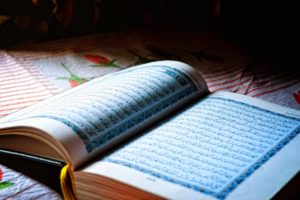
The Quran is both sublime and awe-inspiring. It introduces itself by many names, from al-Qur’an, literally meaning “The Recitation”, to Al-Kitab (The Book), Umm al-Kitāb (The Mother Book), Al-Furqan (The Criterion), Al-Dhikr (The Reminder), Al-Noor (The Light) and Al-Huda (The Guidance).
The Quran is blessed (Quran 6:92) in its origin and destination, content and meaning and inspiration and impact. It is a guidance for mankind and a self-evident proof of that guidance and a standard to distinguish right from wrong (Quran 2:185). It is a clear explanation for all mankind, and guidance and admonition for those who ward off evil. …. (Quran 3:138). The Quran has the divine power to transform people at any time, as it is an admonition and a cure of hearts for all humans and guidance and grace for all believers (Quran 10:57, 17:82).
The Quran is unlike any other book. It is a collection of historical accounts of past people, stories, scientific and other facts. All its information, parables and case studies contain the absolute truth and divine wisdom with universal lessons for humans of all ages and all backgrounds across all of time.
The Quran is not merely a collection of classical Arabic verses for recitation and memorisation, although there are spiritual rewards for the believers in reciting and memorising from it. Being of unparalleled sublimity, beauty and depth, its verses heighten our emotional, intellectual and spiritual state of submission to God, giving true meaning to our fleeting existence on Earth if acted upon.
The Inimitable Quran
The Quran is the definitive and unadulterated eternal Word of God in Arabic. It confirms what came from Him before, through other Prophets (peace be upon them) to guide humanity. It is an oral revelation to God’s final Messenger, Prophet Muhammad (peace and blessing be upon him), who faithfully transmitted His message to humanity and established a blessed society in his lifetime.
The Quran is inimitable and cannot be translated in any language in conventional terms. It is a sacred Book that has been uniquely preserved by its Author – Indeed, it is We who sent down the Quran and it is We who shall preserve it intact (Quran 15:9). The first generation of Muslims, led by Caliph Abu Bakr, became God’s instrument in compiling the revelations into a book form, while the third Caliph Uthman established that version across the Muslim world. All copies of the Quran anywhere in the world are identical, sequentially, verse for verse, word for word and letter for letter. Countless people keep the whole Quran in their hearts and Muslims memorise the basic minimum from it for their five daily compulsory ritual prayers.
The Quran is a matchless masterpiece with captivating power that helps shape the whole being of those who believe in it and seeks success in both worlds. It laid a challenge to the then pagan Arabs to produce a chapter comparable to it (Quran 2:23, 10:38, 11:13, 17:88), but despite their linguistic and poetic mastery in Arabic, they could not meet the demand. The Quran says:
If all human and Jinn were to gather together for the purpose of producing the like of this Quran, they would not produce anything like it, even though they pooled their resources together (Quran 17:88).
The essence of Tawhid
The Quran’s subject matter is vast and comprehensive. It discusses the reality of our universe, its beginning and its end. It also discusses the reality of human life and outlines the correct human conduct to accord with their rightful position on Earth. It provides a clear and comprehensive life plan that covers beliefs, ethics, acts of worship, economics, politics, law and all other areas of human interaction that fit together harmoniously for a wholesome life.
The Quran, precisely and with absolute surety, elucidates Tawhid or oneness of God with His breath-taking ‘best names’ (Divine Names) or attributes of lordship and divinity. A few are mentioned in the Chapter ‘Gathering’ (Quran 59:22-24). It outlines the truth of God as the Creator and Sustainer of the universe. A small Chapter, ‘Ikhlas’ (Purity of Faith) quintessentially defines this Tawhid with an unparalleled profundity;
Say: He is God, the One and only God – the Eternal, the Absolute. He begets none, nor is He begotten; and there is nothing that could be compared to Him (Quran 112:1-4).
The Verse of the Thone in the second chapter is another one that describes God’s supreme majesty:
God: there is no deity but Him, the Ever-Living, the Eternal Master of all. Neither slumber nor sleep overtakes Him. His is all that is in the Heavens and all that is on Earth. Who is there that can intercede with Him, except by His permission? He knows all that lies open before them and all that lies hidden from them; whereas they cannot attain to anything of His save as He wills. His throne extends over the Heavens and the Earth, and the preservation of both does not weary Him. He is the most High, the most Great. (Quran 2:255)
Human arrival on Earth
The Quran mentions the dramatic story of Adam’s (peace be upon him) creation as the first man. God taught Adam the appropriate knowledge that made him superior to angels and other creatures (Quran 2:30-34). In the test of knowledge between Adam and the assembly of angels, the former won. When God asked the assembly to “prostrate to Adam”, this infuriated Iblis who rebelled and became the accursed Devil (Satan). On his request, God gave Iblis respite to derail humans until the Day of Resurrection. Adam and his spouse became the first casualty of the devil’s whisper in the Garden, but they realised their sins and made sincere repentance (Quran 7:23).
God forgave them and sent down Adam and his spouse to Earth, as was the original design. The Devil was also sent down to continue his promise to lead humans astray.
This intriguing story tells us that our journey on Earth is not arbitrary. God equipped the first two humans, father and mother of the human race, with knowledge and intellect not only to physically survive, but also to make the Earth the home of their progeny for generation after generation. With the Devil permitted only to whisper, not dictate, humans have a choice of using their God-given knowledge to follow their Creator or follow the accursed Devil. For believers, knowledge is the key to know God, follow His commands and seek forgiveness when they commit sins. With His infinite mercy, God sent Prophets to remind the people of their role in this world.
Human purpose on Earth
God created this Earth of incomparable beauty, a mega-garden for all humans, with all the amenities for humans to habitate and subjected “all that is in the heavens and on earth” (Quran 45:13) to them. God then decided to create humans as His stewards (Quran 2:30) and honoured them (Quran 17:70). However, in order to make the worldly life a test, God has made it alluring to humans. He reminds us that these are just some of the “comforts of this life” and humans should seek “better things” with God (Quran 3:14-17). Depending on individual human belief and actions in this world, God will decide their ultimate fate, success or failure, in the hereafter.
For human continuity until the end of this world, God designed humans to be created “from a drop of mingled sperm, in order to try him – so, We gave him Hearing and Sight” (Quran 76:2).
However, with this highest position amongst all creatures comes individual human responsibility in this world. God says,
“Verily, to Us will be their return; then verily, for Us will be their Reckoning” (Quran 88:25-26).
On the Day when every soul will be confronted with all the good it has done and all the evil it has done (Quran 3:30)
The Quran clarifies that humans are ‘inspired’ with (knowledge of) wickedness and righteousness (Quran 91:8), and bestowed with the freedom to choose between good and bad; God does not force one to believe. The Quran uses evidences from nature around us or from some past stories to bring home the true meanings and logical appeals to human hearts to make a choice to believe and act. Those who seek guidance from the Quran are bestowed with exemplary values such as truthfulness, patience, modesty, justice, forgiveness, kindness and courage.
The Quran says God’s embrace of human life in this world is all pervasive. Whether one conceals what is in one’s heart or brings it into the open, it is known to God (Quran 3:29, 11:31, 64:4). God is nearer to us than our jugular veins (Quran 50:16). As God is fully aware of the inner recesses of our soul, the Quran asks humans to practise and enjoin humility and modesty by shunning arrogance, envy and other dark features.
The Quran’s elegance
The Quran with its unique constructions, expressions, linguistic patterns, metaphors, allegories, phrases and statements allow multiple interpretations. It contains verses “which are clear and precise – and these are the essence of the Book – and others are equivocal …” (Quran 3:7). The Prophet Muhammad and the first Quranic generation (known as his Companions or Sahaba), who lived by the Quran, left its true meaning and interpretation for future generations until the end of the world.
The Quranic verses were revealed during the Prophet Muhammad’s life in Makkah and Madinah, bringing changes to the style and characteristics in the revelation as a result. These distinct features allow believers of any time to be aware of the historical perspectives and take heed of the lessons from them. Prophet Muhammad’s exemplary lifestyle and leadership transformed the lives of his Companions who remain role models to this day.
The fact that a single unlettered Prophet elevated the then pagan Arabs to rise from their ignorance, ignominy and barbarity to the peak of human excellence – in terms of material success and spiritual height through the Quran – was itself a miracle.
The Quran exegetes throughout history have commented on its miracle, some on its linguistic wonder and others its future foretelling. Marmaduke Pickthall, an English literary genius who translated the Quran into English, celebrated “… the Glorious Qur’an, that inimitable symphony, the very sounds of which move men to tears and ecstasy.”
Quran touches human conscience
The Quran stirs our human conscience. It is for open-minded people who recognise human life as precious and purposeful – not for those who are close-minded and consider this world as a plaything and amusement or are driven by their whims and desires.
It brings the stories of some past nations who rejected God’s Prophets with mockery, hostility and persecution – only to remind people of the lessons and warnings of the consequences if they do the same. 25 Prophets are mentioned in various chapters, with often reiterations and unique emphases at each time so that people use their intellect and learn from those stories.
The past Prophets came with timebound miracles for people to see things through their own eyes; some believed, many did not. However, with the passing of time those miracles later became history and matters of faith. The Quran that came to Muhammad over 23 years of his Prophethood remains a living miracle until the very end, to guide believers and challenge those who doubt or reject it. Those with an unprejudiced attitude to read the Quran’s clear and convincing messages, believe in them and act upon them.
The Quran, like nature around us, is an open Book; only the thoughtful and wise have the ability to grasp its meaning. It elucidates that our momentary life on this Earth is an extraordinary gift, but full of trials and tribulations – where hard work and honesty, patience and perseverance, quality and fortitude will ultimately bear fruit.
Power of knowledge
The first revelation of the five epoch making verses of the Quran to Prophet Muhammad, when he was in the cave of mount Hira in Makkah, were revealed in an awesome manner in the Night of Power (Lailatul Qadr) in the month of Ramadan over 1400 years ago.
Read in the name of your Lord Who has created; created man out of a clot. Read – for your Lord is the most Bountiful One; Who has taught with the pen; taught man what he did not know. (Quran 96:1-5).
These powerful verses signify the essence and status of knowledge for humans as God’s vicegerent on Earth. For believers, knowledge is the essence to comprehend Tawhid, Risalah (Prophethood) and Akhirah (Hereafter).
The Quran is for reading, reciting, reminding, thinking, reasoning, pondering and acting – to live by its message and to attain success in this world and the hereafter. It repeatedly reminds humans to use their intellect (‘aql), sometime in the form of a question like “do you not think?”, or “will you not use your reason?” On other occasions, God suggests “you may think” or “you may understand” to encourage humans to think and stay on the right path.
Will they not, then, try to understand the Quran? Or are there locks on their hearts? (Quran 47:24)
This is a blessed Book which We have revealed to you so that people may ponder over its message, and that those endowed with insight may take it to heart. (Quran 38:29)
Conclusion
The generation that grew up with the Quran in their hearts during Prophet Muhammad’s life left behind a legacy and model for upright character and steely determination for believers to follow in every era. Within ten years of the Prophet’s life in Madinah, the tiny oasis became a blessed land where the spirituality-rooted, comprehensive, but simple life of his Companions brought incomparable blessings for humanity.
Madinah became the centre of a new civilisation, a centre of inspiration for generations. Being equipped with knowledge and possessing actions modelled by the noble Prophet Muhammad, the first generation of Muslims established a new society with their sweat and blood, leading to the onset of the Islamic civilisation and created a golden era with multitude of people moulding their life with knowledge, spirituality and action.
Muslims later fell prey to stagnation, passivity and backwardness because of the weakening of their connection with the Quran and ensuing loss of knowledge and guidance.
The Quran promises success in this world and Hereafter for those who live by its message and guidance. It addresses real world problems for real life people. It reminds us that the people and their stories mentioned within it were similar to us, with the same flesh and blood, feelings and emotions and same reality.
The eternal Quran is here to rekindle our hearts with demands for action. Every time we read or recite from it, God directly speaks to us. Every time we recite from it in prayer we speak straight to God.
We are reminded to think, reflect and look for God’s signs in and around us, to learn from the past, to follow His guidance, to serve humanity and to look after His creations. Do we hear the call, grasp the message and act on it?




1 thought on “How the Quran gives meaning to life”
This is a well-written article which beautifully summarise the contents of The Holy Quran and the great message that is delivered for mankind to reflect and ponder upon. May Allah SWT guide everyone who reads this article with imaan and grants the author success and blessings in this life and the Hereafter. Ameen thummah Ameen 🤲🏻