
Bangladesh Looks Past Family Rule for True Democracy
Introduction
South Asian nations like Pakistan, Bangladesh, India, and Sri Lanka have long grappled with dynastic politics, persistent corruption, and widespread incompetence. In this political system, power is passed down within families rather than earned through merit, resembling a hereditary monarchy under the guise of democracy. This limits meritocracy, promotes nepotism, and weakens democratic institutions.
Family-based rule can erode public institutions, compromising their independence and the checks and balances necessary for good governance. While elections may be held, power remains concentrated within a small elite, with leadership passing down generationally. The Bhutto and Nawab families in Pakistan, the Nehru family in India, the Sheikh Mujib and Zia families in Bangladesh, and the Rajapaksas in Sri Lanka exemplify this trend. While talented members of political families can contribute positively if they serve a country effectively without consolidating power, excessive and long-term family rule often undermines democratic values. John F. Kennedy’s leadership in the United States demonstrated that political lineage does not always have to lead to family rule, but in South Asia this system frequently fosters an unhealthy concentration of power.
The persistence of dynastic democracy creates a culture where political legitimacy is inherited rather than earned. This discourages capable individuals from entering politics and stifles fresh perspectives. Worse, it deepens social divisions as leaders prioritise the interests of their own families, allies and loyalists over the broader population. Consequently, a country suffers struggles with stagnation, widespread disillusionment and a growing disconnect between the ruling elite and ordinary citizens.
The Rise of Mastanocracy
A dire consequence of dynastic rule is mastanocracy, a system where politics is dominated by strongmen, colloquially known as mastans in South Asia, who use intimidation, violence, and corruption to maintain the power base. Politicians use, and often rely on, these figures for electoral muscle and voter suppression, granting them political protection and government contracts in return. This erodes the rule of law and perpetuates corruption, violence, and patronage politics.
Mastanocracy weakens governance, allowing criminal interests to dictate policies for personal gain, often at the public’s expense. Political opponents and civil society groups are often silenced through threats, imprisonment, or worse. As dynastic rulers tighten their grip, they rely increasingly on mastans to suppress dissent, extort benefits, and control constituencies. The judiciary and law enforcement agencies either fail to uphold justice in the face of criminal influence or are often complicit or powerless, further entrenching the culture of impunity.
Furthermore, mastanocracy promotes an environment where violence becomes an accepted political tool. Election rigging, vote-buying, and coercion replace genuine democratic competition. Ordinary citizens, witnessing the impunity with which criminals operate, either withdraw from political engagement or are forced to align with these power structures for their personal benefit or survival. The long-term effect is devastating: a weakened state, the erosion of trust in democratic processes, and the normalisation of political violence.
Pervasive Corruption and Incompetence
Under such a political culture, unethical practices spread across all levels of government, diverting national resources into private hands and eroding public trust. Large-scale embezzlement and kickbacks undermine development, while bribes for essential services like healthcare and education disproportionately harm the poor. Nepotism in public appointments perpetuates inefficiency, leading to governance without accountability.
Corruption misallocates scarce resources, stifles economic growth, and exacerbates social injustice. Public confidence in institutions declines, while mismanagement delays projects and breeds wastefulness. Bureaucratic inertia and political infighting further paralyse policymaking, leaving essential services in disarray.
Furthermore, corruption leads to the brain drain phenomenon, where talented individuals, disillusioned by the lack of opportunity and fairness, seek better prospects abroad. As professionals, intellectuals, and skilled workers migrate, the country suffers from a deficit of capable leaders and innovators, further hindering development.
The Genesis of Bangladesh’s Family Democracy
Since its independence in 1971, Bangladesh has struggled with mastanocracy, corruption, and a lack of visionary leadership. The authoritarian rule of the Bangladesh Krishak Sramik Awami League (BAKSAL) and the devastating 1974 famine led to mass disillusionment. The government’s ruthless response to dissent and opposition led to the persecution and killings of thousands of political opponents. Sheikh Mujibur Rahman’s assassination in 1975 created a power vacuum triggering political instability, culminating in the rise of General Ziaur Rahman and the founding of the Bangladesh Nationalist Party (BNP). After Zia’s assassination in 1981, his widow Khaleda Zia took over BNP’s leadership, while Sheikh Mujib’s daughter, Sheikh Hasina, eventually led the Bangladesh Awami League (BAL).
For decades, these two families dominated the political landscape, leaving little room for alternative voices. Their entrenched rivalry overshadowed national interests, turning governance into a power struggle. The alternating rule of BNP and BAL created a cycle of political vengeance, weakening institutions, intensifying corruption, and moral decay amongst rulers. Instead of serving the people, politics became a means for personal gain. Under Sheikh Hasina’s prolonged totalitarian rule, press suppression, extrajudicial killings, and judicial manipulation worsened and nosedived.
New Bangladesh and Nation Building
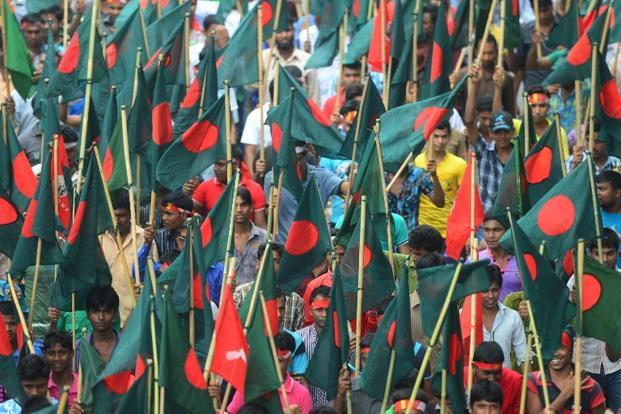
Hasina’s regime faced an unprecedented challenge in the summer of 2024. Although Supreme Court scaled back, but did not abolish, a highly contentious and discriminatory quota system that was alleged to favour allies of the governing party, student-led nationwide unrest demanding merit-based recruitment continued unabated. The government’s violent crackdown, including the use of lethal force against peaceful demonstrators, only strengthened public resistance, broadening the movement’s focus from employment quotas to a wider critique of systemic corruption, lack of accountability, and authoritarian rule. This moment became a turning point for Bangladesh, revealing widespread frustration with politics.
The student-led uprising ultimately forced Hasina’s resignation, paving the way for an interim government under Nobel laureate Muhammad Yunus. Bangladeshis now demand a governance model based on meritocracy, accountability, and patriotism, free from dynastic influence. The transition is an opportunity to restructure governance and break away from past cycles of corruption and nepotism. The interim government has initiated efforts to dismantle the entrenched systems of patronage and reforms are underway to restore the independence of the judiciary, strengthen democratic institutions, and promote transparency in governance.
However, rebuilding democratic institutions is a monumental task that needs patience, perseverance, and pragmatic strategy. Political reform is crucial in areas such as:
- 1) Strengthening democratic institutions by ensuring the independence of electoral bodies and the judiciary.
- 2) Enhancing transparency and accountability through better public oversight mechanisms.
- 3) Empowering civil society and independent media to hold leaders accountable.
- 4) Reforming public administration and improving governance through capacity building.
- 5) Promoting civic education through positive parenting and schooling to nurture critical thinking and patriotism from an early age.
Conclusion
Dynastic democracies pose significant challenges and threats to the governance of a country. Bangladesh must encourage a political culture that values public service over personal or family gain, based on merit, integrity, and the ethos of serving people. Leaders must be held accountable not just by institutions but also by an engaged and informed electorate. Political parties must embrace internal democracy, allowing capable and committed individuals to rise based on merit rather than family connections.
The success of the 2024 protest movement signified a major shift in Bangladesh’s democratic journey. It ignited hope for citizens to unite against misrule and build a just future for all. True patriotism, like motherhood, is rooted in love, not power or self-interest. Bangladesh now has a historic opportunity to build a democratic future beyond family rule, setting an example of the rest of South Asia.





1 thought on “Bangladesh Looks Past Family Rule for True Democracy ”
It would be nice to hear your thoughts on how we can use the current window of opportunity to build sustainable democratic institutions and culture. It’s not that this hasn’t been tried before but has failed because certain families/ political groups preferred status quo as they continue to do so till to date.