
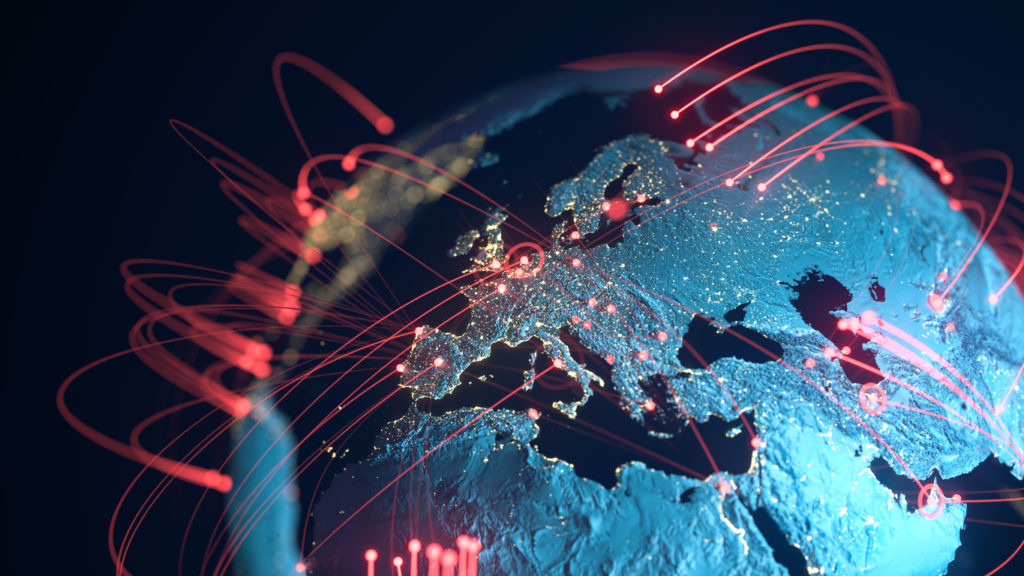
Since the outbreak of the current Coronavirus pandemic from early 2020 the world has seen an unparalleled rise in infections and deaths. The recent remarks from the Director General of the World Health Organisation (WHO) could not be starker when he said “We are at a critical juncture in this pandemic… The next few months are going to be very tough and some countries are on a dangerous track. We urge leaders to take immediate action, to prevent further unnecessary deaths… and essential health services from collapsing.”
The pandemic has created an unparalleled public health and economic crisis with uncertainty across the globe. Whilst some economically developed countries with better equipped health services have been able to respond to some of the difficulties faced through government intervention, others are facing national emergencies. The virus may not discriminate but in reality it is the poor, including those living within developed countries, who are suffering most.
The pandemic has laid bare the cavalier attitude and narrow view held by many of our political leaders. Even in these testing times, when ordinary citizens for the most part are helping one another, the politics of nationalistic, racial or religious prejudice remains unabated in many parts of the world.
How have the powerful countries handled the pandemic?
Four countries, in my opinion, have become a source of disappointment and pessimism for the world.
First is the country which possesses the world’s largest economy. The US is an example of a failure to protect its own citizens. Political divisions and racial tensions have worsened during the period. Instead of lending its support to less fortunate countries and supporting the WHO to cope effectively with the crisis, the US has become more inward looking. In the middle of the pandemic, it formally notified to withdraw from the WHO, inviting widespread criticism as this was seen as an abdication of its political and moral leadership duties in the world.
The next is China, the world’s second largest economy. While figures suggest that the authorities have contained the virus, the persecution of the minority Uighur Muslims in Xinjiang has continued, unrestricted, and in full swing. Over a million Uighurs have been thrown into internment camps. Many describe this as no less than a cultural and religious genocide.
The third is India, the world’s largest democracy. Since 2014, when a Hindu nationalist political party closely linked with a paramilitary Hindutva body that once praised European fascism in the 1930s came to power, Indian Muslims have been subject to hatred and ostracism. Despite making up over 15% of the population, they suddenly found themselves treated as second class citizens with discrimination and attacks rife. The situation has only worsened during the pandemic when the Indian administration accused a Muslim apolitical religious group of spreading the virus.
The last is a European country with a chequered colonial history that upholds a militant form of secularism when it comes to religion, particularly Islam. France has been struggling with tackling the pandemic. Its post-war culture of denying its Muslim population the right to exercise their religious beliefs is seen to be on the rise. As the vilification of Prophet Muhammad (pbuh) continues with state endorsement, the tension between the state and its Muslim community is palpable. When a tiny number of criminals from amongst the estimated 6 million Muslims in the country commit heinous crimes, which French Muslims denounce unconditionally, the French establishment is quick to jump on Islam and all its followers rather than sensibly addressing the underlying causative and political issues. Unhelpfully, the French President recently declared that Islam itself is in crisis and thus needs a reformation. Critics say his attack on Islam is for politics of pandering to the right.
We swim or sink together as human beings
Covid-19 has now become a part of our life and looks to remain as such for the long haul. The virus has created a health crisis for many, particularly the elderly and those with underlying health conditions, but alarmingly it has also impacted seemingly young and healthy individuals.
Unlike many pandemics noted in the history books, it has touched every corner of the world, due to this era of globalisation and increasing human inter-dependence. Our world can no longer pin its hopes on the shoulders of powerful political leaders who have little moral authority or willingness to unify people. On the other hand, many of them seek to divide people on the basis of race, religion or culture.
Conversely, it is ordinary people who are coming forward and working with others in civil societies to help those that are less well-off.
As it is across many countries, we see in the UK an upsurge of empathy for fellow Britons who struggle to make ends meet and feed their children due to poverty. Amid the government’s intransigence against directly helping to feed children during the school holidays, the footballer Marcus Rashford’s campaign struck a cord with the public and brought people together to achieve an objective based on centred around compassion and empathy.
Human beings are ‘stewards of God’s earth’ (Al-Qur’an 2:30) who were given ‘dignity (Al-Qur’an 17:70)’ and ‘created with diversity (Al-Qur’an 49:13)’.Conscientious Muslims have an unconditional moral duty to rise above any forms of bigotry and do their best to work for the common good of all, irrespective of backgrounds. What the world desperately needs is servant leaders in the model of the Prophets, amongst whom Prophet Muhammad was sent as a ‘mercy to the worlds (Al-Qur’an 21:107)’.

3 thoughts on “The Hard Lessons Learned From The Pandemic”
Really enjoyed the article, the comparison of some of the biggest nations and their national leaders attitude towards own citizens and irresponsible attitude is really saddening. You have pointed out nicely that how deep human divide is and could be.
Where as there is also hope, as a result of internet and social media the general people can also make a impact and positive pressure on political leaders, if they can come up with a good appeal that resonates with peoples real feeling and emotion. The climate change movement, the crowd funding ideas, the just giving platform all shows that there are areas we can play a part for a better world.
I like the conclusion of the article on a positive note. Muslims today are largely passive. But if we really follow the role Model of Prophet Muhammad (pbuh) we can see that there are so many social and national issues that we can play a part and be a force for general good. We, Muslims, need to shift our passionate focus from Islamophobia and global propaganda against Muslims(it has and will always be there). Rather we need to prove ourselves a force for good, even at a personal level and if many of us can do this, it will be much stronger answer to current anti-Islamic sentiments fuelled by some of the political leaders.
Thoughtful & agitational article – quite understand why you ‘name’ those four countries even though I thought your fourth one might be UK!
Trouble is we can do little about the four you identify but can do something about the UK – the known Islamophobia in Tory Party; the chaos of the management of the pandemic & Brexit exit; the hostile environment in the Home Office which effects Muslim refugees especially; threatened climate catastrophe – what’s the plan for our own back yard? ? ?
Alhamdulliah, this is what exactly everyone needs to read, especially the young Muslims in Europe and Asia. The structure of the article is awesome, as it is portraying the current picture of the world, also I feel it is giving me an answer at the end, how to react on the crisis I am as a British Muslim witnessing today. The answer is in my faith, in the life of Prophet Mohammed PBUH. While, many disrespecting My Prophet Mohammed PBUH, by studying his life we can reverse that attitude, we can teach ourselves how to erase race and religion based discrimination from our Community. JazakAllah Dr Bari for this. I am feeling hopeful. Alhamdulliah