The Prequel to my A Long Jihad: My Quest for the Middle Way (2018)
PART 1 – CHILDHOOD YEARS: TIME OF INNOCENCE
I was born in my grandparents’ village in the then eastern Wing of Pakistan, a new nation whose bloody arrival had demanded the sacrifice of a million lives just six years earlier. It was winter when village men, mostly farmers, remained busy farming their winter crops and women often prepared rice-based sweet cakes. My nani (grandmother) was an expert midwife who had brought a score of children, her own and their children in turn, into this world. Her expertise was based on learning from other women from time memorial, at least since the days of the Mughal period. This was handed down over generations in this low-lying land of rivers and monsoons. Her village, Deovog, was one of many dotting the district of southern Tangail lying in the rice-growing belt surrounding the sprawling metropolis of our capital, Dhaka.
Galli, my own village, was about four miles away down a narrow track, a sprawling land of pristine paddy fields, home to over a thousand souls, mainly Muslims but with a Hindu minority. In winter it was speckled with the golden glow of mustard fields. In summer, the heady aroma of mango buds and the fruit of a dozen other plants mingled with the smell of raw or ripening crops, creating a heady, hypnotic scent as we played. An endless blue sky and thundering clatter of monsoon rain captivated my childhood.
For my mother, nani’s house was a place of familiarity and safety, giving birth surrounded by the strength of my formidable grandmother. As was traditional, my father and the menfolk were away, tending to their fields and livestock. Their political fathers lay even farther distant, a thousand miles west in West Pakistan, divided by language, borders and the huge presence of India between. The world into which I was born seemed trapped in a timeless, rural idyll – but in truth it was shifting, ripe for another revolution.
For myself and my friends in those early years, it was also a time of optimism. The great wars had ended. For people of my parents’ generation there was euphoria at escaping the clutches of colonialism. Not only had the old masters been cast off, but they had broken from the ‘Zaminders’, harsh Hindu landowners and overlords who had controlled massive amount of lands during the Raj. In the aftermath of independence in 1947, the Zaminders had left for India, leaving behind us majority Muslims and minority ordinary Hindus to begin our new life together.
*
It was a time of innocence. Galli was a mixed community and growing up I did not understand the divisions that were later to tear our country apart. I counted several Hindu children among my best friends. Lal Chand Mondol, a Hindu boy, was my very best friend. His family was poor and he had no father, just two brothers. We played together, ran together. We competed. He was the top boy in the class. I was second. He used to work on the small patch of land his mother could afford, even when he was at primary school. He was a devout Hindu but there was no conscious divide between us. He went to my house, and I to his.
Few of us were that religiously observant – certainly we were not ‘conservatives’ – and we were all part of the same ethnic group: we may have been Muslims, and they Hindus, but we were also all Bengalis. ‘They’ were lower caste, ‘Baishya’ and ‘Shudra’ (or ‘Nomoshudra’) the lowest of the Hindu castes, too poor to leave; they were categorised by the government as ‘Scheduled Caste’ for providing support in job and other areas. To me, they were simply my friends. We grew up and studied together; fought and laughed together. I saw their parents, cousins, brothers, aunts and uncles on a daily basis. They were no different to us.
Our shared world back then was village, the surrounding fields, the neighbouring villages and the fickle temper of Mother Nature on whose bounties our families relied. Tensions would rise elsewhere in the country, but Galli was a landlocked ocean of tranquility. My elder brother, who later rose to become a very influential community leader, would champion the Nomoshudra’s cause and I believe that is one reason that Galli remains, even to this day, insulated from some of the chaos that has gripped other parts of Bangladesh.
For my father’s generation, who had lived through the dying days of British Indian rule, theirs was a life marked by struggle against colonialism. Demonstrations, in some cases violence, had all been common in preceding generations. My uncles would sit around at our house as the winter evenings drew in, chatting with my dad and talking of the old days. We called them ‘Chacha’ – uncle – or ‘Bhai’, a term of respect added to peoples’ names. It was from them, and the ‘Amin’, Tohiz Uddin Sikder – a slim man with just a few white hairs who was our clan leader and the settler of land disputes and arbiter of marriages – that I learned of our history.
There was no record of our family history in the village, but the elders told me that we originally belonged to a large clan called the ‘Sikder’ who had come to Galli many generations ago and probably had Persian roots (their name meaning ‘keepers of peace’). There were many other Sikders in Bangladesh, some very prominent. Some in our clan chose to use this name enthusiastically; others did not. Thankfully clan and tribe carried less weight for most Bengalis than many other peoples.
My life and the world of the village were tranquil, but in truth it was a time of change. When I was growing up, what is now ‘Bangladesh’ was known as East Pakistan, which had emerged during an extremely bloody partition of India in 1947. Split between two wings, Pakistan lay one part to the west – cut off by India – and the other to the east (with over a thousand miles of Indian territory between). Perhaps with such geographical cards stacked against it, it was ever doomed to fail. The political leadership in Pakistan, based first in Karachi and later on in Islamabad, and the East Pakistan government in Dhaka, dismally failed to lead our country. Political short-sightedness and even blunder, corruption, incompetence and arrogance paved the way for a bloodbath later on.
On 21 February 1952, the year before I was born, a huge march by Dhaka university students demanding Bengali be made the official language (in addition to West Pakistan’s Urdu) was met with extreme violence. It was reckless and totally unnecessary. Police fired on the demonstrators, killing several, leading to mass strikes, widespread rage, and igniting the fires of political consciousness leading to independence movement that would later tear the country apart.
The irony was that an entire generation of Muslims and Hindus had united at the beginning of the 20th century to bring an end to the Raj in India. It started as a movement for a united India, but political reality and distrust between Muslim and Hindu leaders created two parallel movements, one led by the Hindu-majority Indian National Congress (founded in 1885) and the other by the Muslim-majority All India Muslim League (founded in 1906 in the historic city of Dhaka). A triangular politics of bargain and negotiation between the British government, the Congress and the Muslim League in the second quarter of the 20th century brought the independence of two lands on 14 August 1947 – a smaller Pakistan, consisting of two wings on the eastern and western side of the Indian Subcontinent, and a bigger India proper in the middle – which came into being on the following day
*
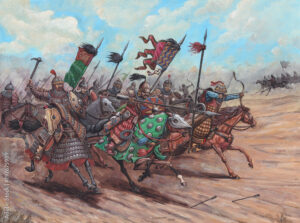
Bangladesh, meaning ‘land of Bengal’, has been part of a bigger region of Bengal that consisted of present-day independent Bangladesh and the Indian state of West Bengal. The current Bangladesh borders were established with the partition in 1947. The history of greater Bengal goes back about 4,000 years when the region was settled by mainly Dravidian people. The origin of the word ‘Bangla’ or ‘Bengal’ is believed to be derived from ‘Bang’, the Dravidian-speaking people that settled in the area around the year 1000 BC. Various dynasties have ruled greater Bengal since then. Islam was introduced by Arab Muslim merchants and Sufi missionaries many centuries before the Muslim rule officially started on 1203, after Bakhtiyar Khilji, a Turkic general, overpowered Lakshman Sen of the Sena dynasty without a fight and captured large parts of the region. Tradition has it that Khilji’s conquest of Bengal at the head of 18 horsemen was foretold. He was of common birth and short physical stature, with long arms extending below his knees. When the news of his arrival reached Lakshan Sen’s court it is said the latter fled through the back door of their palace.
After that the Bengal region was ruled by various Muslim dynasties until the 16th century when the Mughal Empire took control. Dhaka became a provincial centre of Mughal administration.
According to European geographers Bengal was probably the wealthiest part of the subcontinent. The history of how the East India Company took over Bengal in the 18th century, which was then known as ‘Golden Bengal’ because of its prosperity, has become a story of bitter betrayal.
Towards the end of the 17th century the Delhi-based Mughal Empire was becoming weaker, allowing the rise of autonomous or semi-independent territories. In the east, the combined territory of Bengal, Bihar and Orissa became one such Sultanate which, although nominally aligned to the Mughals, was being run by independent Muslim rulers from the Nawab dynasty. European trading organisations were trying to establish a foothold in India at the time and managed to convince the Nawabs to give them access to several of the port cities of greater Bengal. By the time Nawab Ali Vardi Khan became ruler in 1741 the notorious British East India Company was operating in Bengal. Ali Vardi Khan realised that the Company posed a mortal danger to his Sultanate and tried to curtail its influence. But he was too late. With clever use of bribery of some of the opportunistic leaders of the Sultanate itself, the Company’s foothold became too strong.
Before his death in 1756 Ali Vardi Khan strongly advised his grandson Siraj ud-Daulah, the next Nawab, of the imminent danger posed by the Company. Siraj ud-Daula, then 23-years-old, was surrounded by powerful conspirators from within the ruling class and could not rally his supporters to defend the land effectively. The cunning head of the East India Company, Lord Robert Clive, took advantage of an exaggerated story of the massacre of some British subjects by Siraj ud-Daula’s army in Kolkata and found an excuse to attack the Nawab. He skilfully pocketed Mir Zafar Ali, Siraj ud-Daula’s commander-in-chief, to his side and in the ‘Battle of Plassey’ defeated the Nawab without a fight. Mir Zafar’s treachery blackened the history of Bengal; ever since then he has been so despised that no Indian has ever been known to name any of their children after him (an otherwise common practice).
What happened in Bengal with Robert Clive and Mir Zafar was symptomatic of decadence, ‘divide and rule’, and not untypical in other parts of the world where indigenous peoples lost their independence to European traders/settlers/colonisers. Mir Zafar’s treachery has been replayed over decades and centuries in other countries. Many post-independent developing countries are struggling even today with opportunistic political leaders who prefer to serve their overseas masters than their own people.
The defeat of Siraj ud-Daula in 1757 opened the floodgate to British colonialism of the whole of India. India’s other semi-independent rulers were defeated one after another; some of them like Tipu Sultan in Mysore fought like lions against the British, but in vain. In 1857 there arose a spontaneous revolt (‘Azadi Andolon’, or Freedom Movement) which British historians call ‘The Sepoy Mutiny’. The movement was crushed ruthlessly and the British government took over the destiny of India since then.
Greater Bengal was the longest colonised part of India, running under British rule from 1757 until 1947. During this time India was struck by many famines and man-made disasters, including the Great Bengal famine of 1943 that claimed three million lives. The famine had a severe impact: from being one of the richest known lands in the mid-18th century, Bengal was a basket case by the time it became East Pakistan in 1947. According to a British civil servant, WW Hunter, who wrote the phenomenal book ‘The Indian Mussalmans’, the Bengali Muslim middle class simply vanished by the second quarter of the 19th century, a process taking no longer than six or seven decades. By the time British India was divided into India and Pakistan in 1947, Bangladesh was the most impoverished part of India.
The British Raj had ruled India with an archetypal ‘divide and rule’ policy, giving favour of one group over another to fragment the opposition to their rule. When it left, the seeds of future enmity lay between India and Pakistan. British civil servants had partitioned India as if they were cutting the map with a scissor according to their whims, without serious consideration for the many millions of people now living across those lines. Punjab and Bengal were divided; this created bloodbath, particularly in Punjab, during and in the aftermath of the partition. The princely Muslim state of Hyderabad was handed over to India. Another Muslim state, Kashmir – but ruled by a Hindu king – has remained forever a flash point between Pakistan and India.
Pakistan, too, was vulnerable. Political exclusion of ordinary people, ethnic and linguistic discrimination among the provinces, and economic and cultural neglect of the East Pakistani (now Bangladeshi) people by the politically-dominant West Pakistan created popular resentment and agitation.
As these embers of future conflict glowed, I breathed in the air of optimism that still clung to our insulated oasis. We all looked forward to a bright future as Pakistan, the ‘pure land’ as its name meant; pure, and Muslim.
*
Mine was a very peaceful childhood. I grew up with near-absolute freedom. In those early years I lived my life outside my tin-shed house. Galli and a few clustering villages were my world. There was one unpaved village road and no cars. Three miles away was a bus station. In between was a river in between which you had to cross by ferry in the summer monsoon season. In the drier winter we would scramble over a temporary bamboo bridge.
In this rural life everyone knew everyone else – your business, your relatives, all the gossip, the woes and struggles shared. As I roamed, everyone called out my nickname, ‘Barik’. It meant ‘blessing’ in Arabic. Although ‘Muhammad’ was my first name, I only used it seriously when I came to England: Bengalis even today tend not to use first names and surnames together.
I was a small, hyperactive boy, forever climbing trees or wandering as the will took me. I had a fair complexion but was told that when I got angry or exhausted my face would become reddish and my hair stand up on end. Some village aunties affectionately called me ‘dhola bilai’ or white cat. My life was full of adventure and small mischief – throwing stones into other people’s trees then plucking mangoes or berries, or destroying crops by running over ploughed land. I was, you could say, a little ‘scamp’. My restless nature was kept in check, however, by numerous aunts and uncles – some actual relatives, others ‘village uncles’ and elderly village ‘grandparents’ (friends and neighbours) – all of whom could (and would) tell a small child what to do. The world knew you in Galli and it was not easy to break its unwritten boundaries.
The focal point of my early life was our playground. It drew me, especially in the late afternoon when it was buzzing with boys my age, despite an often-dense cloud of mosquitos (which became intolerable after sunset). Here in England, a playground or village green is something quite ordinary, commonplace even. In those days for us it was as rare as a jewel. It is now worse. Land was scarce; it denoted power, status, respect, and the ability to marry. For our village to have people willing to donate precious land said something a little out-of-the-ordinary about us as a community.
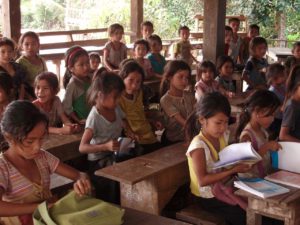
We would flock to that playground every single day, joining a host of other children from the surrounding villages. There were games and fights, friendships won and lost, imaginary wars and villains fought: all took place on that modest piece of grass in front of our little village primary school (another part of our community’s pride and joy). Every afternoon I’d be there with the older boys, watching as they played volleyball and football, or as girls walked by, shyly giggling at the boys they admired.
It was there that my love of sport grew. If I wasn’t in the playground, my family could usually find me up a tree. Whether thorny or tall – mango, berry or banyan tree – I’d scramble up without any support or rope. I was skinny and fast: I knew how to get right to the top and pick berries or mangoes that others would struggle to reach. And I was cocky enough to show off to my friends from high up in the canopy, too, dancing like a monkey and calling down below. I’d often hear one of my village uncles calling out: ‘Is the youngest son of Manikuddin going to be mad?’ I laughed it off. I was to quickly learn one of my first (and hard) lessons.
I was picking my way up through one of the many trees surrounding our garden. I suddenly wobbled, grabbed out for support … and caught air. I dropped through the branches, banging and brushing through numerous scaly hands, ripping my clothes to shreds. Any other time, that would have been enough to earn me a sharp scolding from my-ever tolerant parents – but this time luck was not with me. I landed with a huge thump, ripping into the sharp edge of a metal plough blade below. I shrieked; the pain was intense. Blood spurted from my groin. The good thing about being in a village was that someone (usually women) was always around. Everyone rushed out, screaming as I screamed. Someone lifted me, took me into the darkness of our house and I was put on a chouki – a wooden platform. My father was working in his paddy field not far away and someone shouted to fetch him. I remember his face, working with concern through my tears of pain, as he did his best with his herbs and poultices. I was in bed for many days; I don’t remember much, just that pain. I still have the scar today.
I obviously didn’t learn my lesson, though. Just a few months later I fell out of our mango tree, flat onto my back, and managed to knock myself out for several seconds. By the time I opened my eyes my mother’s face was pressed close, clucking and worrying alongside several of my aunties. I stood up shakily and gave them a big smile. I was not hurt, I told them, before brushing myself down and proceeding to try and scramble up the trunk again. When it came to Nature, I was a slower learner than in the classroom!
But that love of climbing has stayed with me. When I first came to Britain and went for an outing or picnic I would try and find a forest or wood, getting out of my car to climb the nearest tall tree. I’m sure it sounds strange: a grown man tearing up a random oak tree in the heart of Middle England. But it gave me a sense of freedom; a connection back to the land, and life, I had left behind; a small reminder of those young days of mine in Galli.
*
In those early years, I was always chasing my father. He was my world. I was hyperactive, full of energy, but he showed me, his youngest son, endless patience. He was called ‘Lal Bhai’ or ‘red brother’ (meaning ‘elder brother’) out of love and affection. A noted healer, I would go hand-in-hand with beloved Lal Bhai, carrying his spices and crops, roaming the nearby bazaars of southern Tangail, hardly ever leaving his side.
My siblings were much older, already grown by the time I was a small boy. My eldest sister had died when I was very young. I had one brother, at least 10 years older than me, plus two more sisters, one 5 years older and another 6 years younger. My brother Monir-uddin, who later became a teacher and then a local leader, was to build a secondary school. He was chubby, impulsive, madly into sports. He became angry over the smallest of matters, even missing a kick during football. He was a colourful man who didn’t take religion seriously; in fact, he didn’t take life too seriously. He played cards and came home late (even after his marriage). I was closer to my sisters – elder Roushanara, who married when she was 16, open and blunt, but supportive – and Hasina, the youngest of us, lovely and cuddly. As the youngest boy to arrive in this brood, it seems I received the lion’s share of my dad’s attention.
Unusually, my father had been an only son. His own parents had died long before I was old enough to walk or run. I suspect he was spoiled by my grandparents. Apart from primary education, he didn’t “have” to attend any formal schooling in his life. This caused him a great deal of agony over his missed chances later in life. Yet that regret also gave him a passion about the need for learning: he had a burning desire to see that at least one of his children got the high-quality education he had lacked.